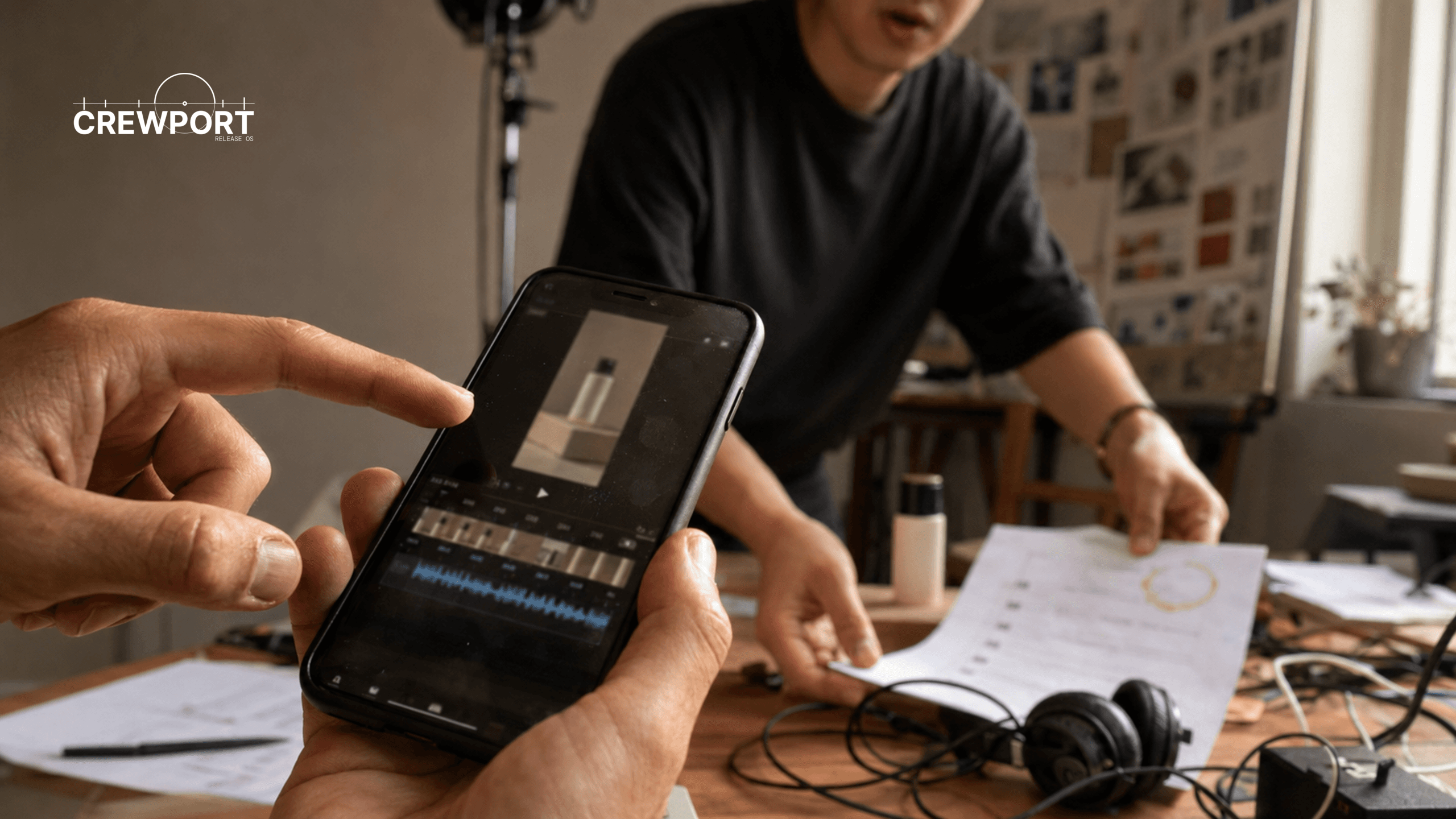
A social media manager opens TikTok, finds a popular song inside the app, and drops it under a fifteen-second video announcing a sale.
The song is right there. The platform lets it be selected. The post uploads without a single warning. Three months later, the brand gets a letter from a record company.
This is a recurring pattern now, not a freak event. Marriott, Bang Energy, the University of Southern California and others have all faced claims over music used in promotional social posts — and Designer Shoe Warehouse is currently fighting multiple rightsholders over the same core issue. DSW's position is that licensing agreements between music companies and platforms like TikTok and Instagram covered its use. Sony, Warner, Universal and BMG argue the music was never authorized for DSW's commercial advertising.
The answer matters far beyond big retailers. Independent artists advertise releases, producers promote services, labels hire creators, venues post concert clips, and managers approve branded collaborations every single day. And a song appearing in the editing menu doesn't tell any of them what rights come attached to it.
What's actually happening in the DSW cases
In May 2025, Warner Music affiliates sued DSW's parent company, Designer Brands, alleging unauthorized use of more than 200 recordings and compositions in promotional posts on TikTok and Instagram. The complaint reportedly included music by Cardi B, Fleetwood Mac and other Warner artists, with Warner seeking statutory damages that could reach $150,000 per infringed work if willful infringement were established.
Sony Music filed a separate action involving recordings including Becky G's "Shower," Beyoncé and Jay-Z's "Crazy in Love," Doja Cat's "Paint the Town Red" and Mariah Carey's "All I Want for Christmas Is You."
DSW didn't just wait to defend. In July 2025 it filed its own declaratory-judgment action in Ohio against Sony, Universal and BMG entities, asking a court to confirm it hadn't infringed. Then on August 6, 2026, Judge Michael H. Watson dismissed the portion of DSW's Ohio case aimed at Sony Music Entertainment and its affiliates, calling it an improper anticipatory filing that should give way to Sony's infringement case in California.
Here's the part worth reading carefully, because it's easy to misreport. That ruling did not decide that DSW used the music illegally, and it did not decide whether platform licenses cover businesses. It was procedural: DSW lost its preferred venue for litigating against the Sony record companies, claims involving other defendants remain pending, and the central licensing dispute is still very much alive.
The platform's license may not be your license
TikTok, Meta and other platforms negotiate music licenses covering uses inside their services. Those deals make enormous catalogs available to users without everyone having to phone a publisher before posting a holiday video. But the scope is not unlimited.
A platform can license music for personal user-generated content while excluding advertising, sponsored content or other commercial exploitation. It can offer a separate catalog for businesses. Rights can differ by territory, account type, format, and whether the post is organic or paid.
TikTok tells users promoting a brand, product or service to use its Commercial Music Library, because that catalog is pre-cleared for commercial use — and Business Accounts don't get the same general music-library access as personal accounts, since TikTok says those songs are restricted to personal entertainment use. Meta draws its own lines: its guidance says Instagram Reels ads can't use the ordinary licensed-music catalog, and advertisers should use original audio or commercially cleared material like Meta's Sound Collection instead.
The practical rule is short: availability inside an app proves a button exists. It is not a complete license opinion.
"Commercial use" starts earlier than people think
A post doesn't need a "Buy Now" button to count as commercial. Content can be promotional when it:
- advertises a product, service, event or sale;
- directs viewers to a store or booking page;
- promotes an artist's paid performance or merch;
- forms part of a sponsorship;
- is made by a compensated influencer;
- supports a company's brand identity;
- is later boosted or converted into an ad;
- is published by a business as part of a campaign.
Context is the deciding factor. A singer posting a casual rehearsal for followers is in a genuinely different position from a shoe company running the same song over a product montage.
And here's the workaround that circulates constantly: switching a Business Account to a personal or creator profile does not turn advertising into personal use. Account labels help platforms manage access, but the purpose of the post doesn't change because you changed a setting. It's a popular move. It's also fragile.
Two music rights usually need attention
A released song normally carries at least two relevant copyrights:
- the composition — the melody, lyrics and underlying song;
- the sound recording — the specific recorded performance, or master.
Pairing music with video generally needs permission covering the composition. If the video uses an existing commercial recording, you probably need permission covering the master too — and clearing one side doesn't clear the other.
Say an independent artist lets a clothing company use her recording in an Instagram campaign. She owns the master, but she wrote the song with two collaborators whose publishing is administered elsewhere. Her approval may solve the recording side and still not authorize sync of the composition. Flip it around: she wrote the whole song but signed the master to a label — now she can approve her composition interest but may not control commercial use of the released recording. Even a cover doesn't automatically fix it; re-recording avoids the original master, but the underlying composition is still protected.
"Original sound" is not a rights category
Some posts show a recording as "original sound" simply because the audio was uploaded with the video instead of selected from the platform's catalog. That label describes how the platform received the file. It says nothing about originality or ownership.
Sony's complaint against DSW reportedly points to posts where familiar commercial recordings appeared as original audio — including a July 2024 promotion that allegedly used Becky G's "Shower" alongside a sale message built around the song's Fourth of July lyric. Calling the upload "original sound" wouldn't turn the recording into DSW's property. If anything, it makes the rights problem harder to catch before publication. So treat user-uploaded audio with more scrutiny, not less.
Bang Energy already tried the platform-license argument
The most useful real-world precedent comes from litigation involving Bang Energy. Universal companies alleged the drink brand used their recordings and compositions in roughly 140 TikTok videos. Bang argued it understood TikTok to have licensed the music for platform users.
In July 2022, a federal court in Florida granted Universal partial summary judgment on direct infringement, finding Bang had posted the protected music without authorization — and holding that Bang's belief that TikTok supplied a license could matter to damages but did not eliminate liability. The court also looked at videos from paid influencers; it didn't grant Universal summary judgment on every secondary-liability theory, but it found Bang had exercised significant control over its influencer program.
The uncomfortable lesson for brands: sincerely believing the platform cleared a song may not be enough. Check the actual scope before posting.
Influencer agreements need a music clause
A company can tell an influencer to make content, approve the final video and pay for the post — while leaving music choice entirely to the creator. That does not remove the company's risk. An influencer agreement should address:
- whether music may be used at all;
- which approved catalog or supplier must be used;
- whether the content is organic, sponsored or paid media;
- where the post may appear;
- how long it may stay live;
- whether the brand may repost, edit or boost it;
- who obtains composition and master permissions;
- who keeps the license documents;
- what happens if a platform mutes or removes the post;
- who handles a claim.
A blanket promise that the creator's content "does not violate third-party rights" is useful but operationally thin — the creator may still grab a trending sound without understanding the difference between personal and commercial access. Give creators an approved music source before production, and review the audio during approval, not after the post takes off.
Boosting a post can change the rights analysis
You publish an organic Reel using music available inside Instagram, it performs well, and you decide to boost it. That second step can create a brand-new problem, because the platform's license for an ordinary post may not extend to paid advertising — and Meta expressly restricts ordinary licensed music in Reels ads. A post that was fine in its first context can get rejected, muted or hit with a claim once it becomes an advertisement.
Before boosting existing content:
- Identify every piece of music.
- Confirm whether the track came from a commercial library.
- Review the permitted platforms, territories and media.
- Check whether paid placement is included.
- Confirm the license duration.
- Replace the audio if the rights don't cover advertising.
- Save the applicable terms and license record.
Do this before the media spend starts. Rebuilding a video after the campaign is booked is an avoidable mess.
For artists, this risk is also an opportunity
Flip the whole thing around: brands want music that feels current, fits short-form video, and can be approved fast. Famous recordings are attractive but can require several negotiations and a real budget to clear. An independent artist or label that controls both the master and the publishing can offer genuine one-stop licensing — which is commercially valuable when the ownership data is reliable and somebody actually responds.
Prepare a social-and-advertising licensing package with clean and explicit versions; instrumental and vocal versions; short edits where useful; ISRC and release information; the master owner; composition owners and shares; publisher and administrator contacts; territory restrictions; union or performer limitations; a single authorized clearance contact; and proposed terms for organic posts, paid ads and influencer campaigns.
One caution: don't call a track "one-stop" if a co-writer, publisher, featured artist or label still has to approve it. Speed is valuable. False certainty is expensive.
Where CREWPORT fits
The thing that makes a track licensable fast is boring and decisive: reliable ownership data and identifiers a brand can actually trust. CREWPORT validates your metadata before delivery and keeps your ISRCs, credits and artist-profile IDs attached to every release, so when a licensing opportunity appears you can answer who owns what quickly and correctly. CREWPORT distributes your recording and doesn't grant sync or advertising rights on your behalf — but clean, consistent source data is exactly what turns "let me check" into a same-day yes.
A practical approval workflow
Before music enters any brand, label or artist campaign, ask five questions.
1. What is the post selling? If it promotes a business, product, service, ticket, sponsorship or paid collaboration, treat it as commercial.
2. Where did the music come from? Note whether it's from a platform's general catalog, a commercial library, an external licensing service, a commissioned composer, or the creator's own files.
3. Who controls both rights? Identify the composition owners and the recording owner. Get written permission when the platform's commercial license doesn't clearly cover the use.
4. Where will the content travel? A license for one organic TikTok post may not cover Instagram, YouTube Shorts, paid ads, websites, retail displays or TV.
5. Who keeps the evidence? Save the track selection, account type, library description, terms, receipts, agreements, approvals and final video. Platform catalogs and policies change.
One approved folder per campaign is enough. A screenshot taken after the claim arrives may not show what the terms said when the post went up.
Treat social video like advertising
TikTok and Instagram made video production feel casual. Commercial music rights didn't get casual along with it.
DSW may ultimately prove that specific platform agreements covered some or all of its uses — the Ohio ruling didn't decide that, and the continuing lawsuits will examine the licensing language, platform practices and the nature of the posts in detail. But most independent teams should not build campaigns on the hope of winning that argument later.
If a post promotes something, identify the music before you publish. Use the platform's commercial catalog where its terms clearly cover the campaign, commission original material, or get permission for both the composition and the recording. The song sitting next to an "Add" button is the beginning of the check. For a business, it should never be the end.
FAQ
Can my business use trending songs from TikTok or Instagram's music library?
Often not for commercial or promotional posts. Platforms typically license their general catalog for personal user content and route businesses to a separate commercial library (TikTok's Commercial Music Library; Meta's Sound Collection for ads). Availability in the app isn't proof the use is licensed for advertising.
Does switching my Business Account to a personal profile make it OK?
No. The purpose of the post is what matters, not the account setting. Advertising doesn't become personal use because you changed profile type.
Is "original sound" copyright-free?
No. "Original sound" just means the audio was uploaded with the video rather than picked from the catalog. It says nothing about who owns the recording — a commercial song uploaded that way is still protected.
If I clear the recording, am I covered?
Not necessarily. A song usually has two copyrights — the composition and the master. Clearing one doesn't clear the other, and a cover still needs the composition cleared even though it avoids the original master.
We told our influencer to pick the music — are we off the hook?
Not automatically. Brands have been found to carry risk for influencer posts. Put a music clause in the agreement, give creators an approved source, and review the audio before the post goes live.
We boosted an organic post that used library music. Is that a problem?
It can be. A license for an organic post may not extend to paid ads — Meta restricts ordinary licensed music in Reels ads. Re-check the rights (and often replace the audio) before you put money behind a post.
Make your catalog easy to say yes to
When a brand wants your song, the deal often dies in "let me find out who owns this." The artists who win sync and social licensing are the ones who can answer instantly — with reliable identifiers and ownership data behind every track.
CREWPORT validates your metadata before delivery and keeps your ISRCs, credits and artist-profile IDs attached to every release, so your recording is identifiable and your ownership is clear when opportunity knocks.
This article is general information, not legal advice. The DSW litigation is ongoing and unresolved, platform policies change frequently, and music-licensing rules are fact-specific — confirm current terms and get qualified legal advice for anything affecting a real campaign.
Sources
- Music Business Worldwide — DSW's Declaratory Claim Against Sony Dismissed, August 10, 2026
- TikTok — Commercial Use of Music
- TikTok — Personal and Business Account Music Access
- Meta — Creating Instagram Reels Ads With Music
- Meta — Music Access and Sound Collection for Commercial Use
- U.S. District Court — UMG Recordings v. Vital Pharmaceuticals
- Reuters — Music Copyright Risks in Social Media Marketing